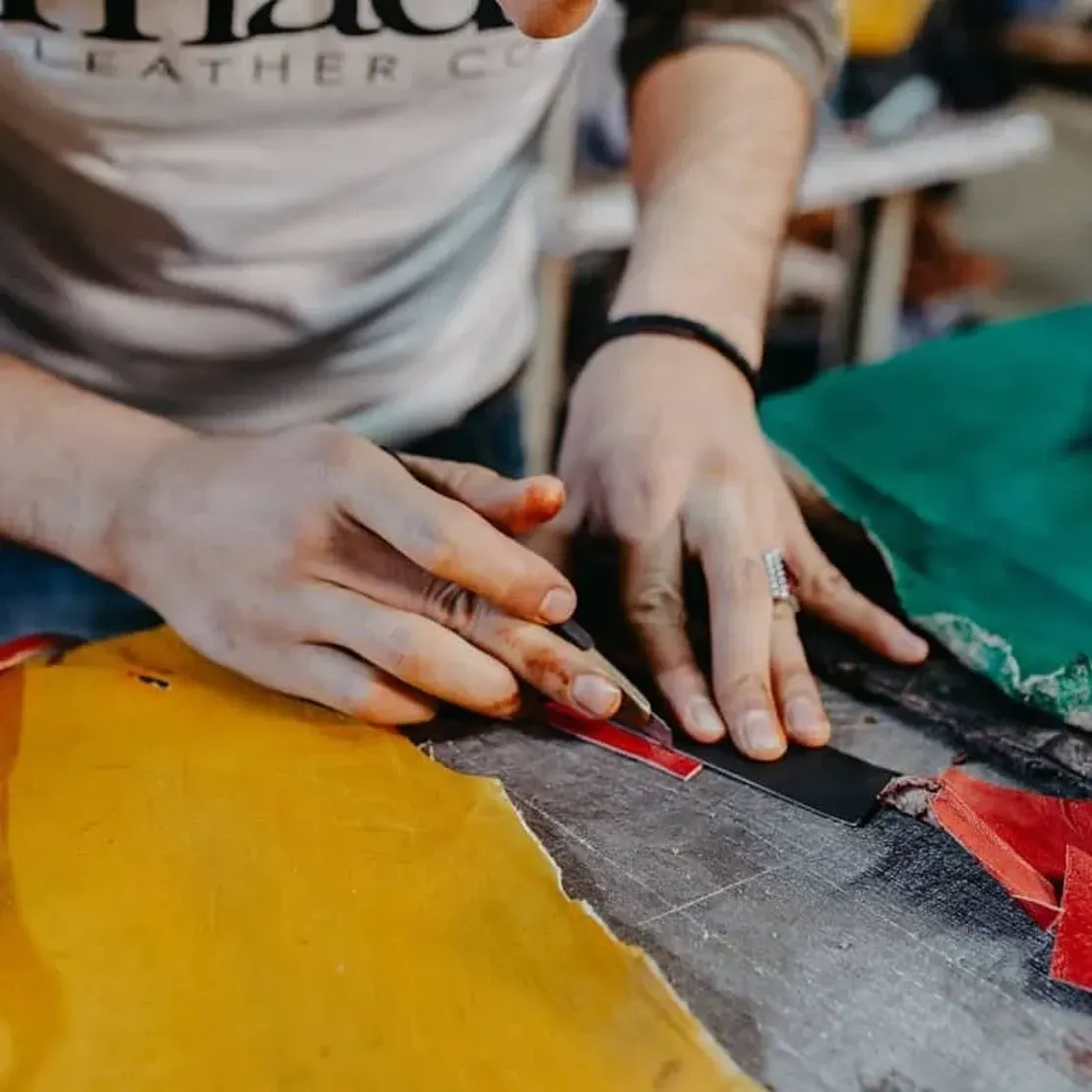
Leather craftsmanship in Morocco reflects a tradition shaped by culture , geography , and artisan skill . Regions have developed their ways of working with leather , including tanning methods , textures , patterns , and bag designs .
At Flydigito , we focus on these traditions in every leather bag . Each piece connects use with the heritage of Moroccan craftsmanship .
Fes has been known for leather craftsmanship for generations . Walking through its tanneries and workshops , you can see artisans working with methods that have been passed down over time .
Leather from Fes is known for qualities :
It is vegetable-tanned using ingredients
Full-grain leather keeps its marks and texture
Bags are put together by hand using stitching
Pieces include details like engraving or embossing
The goal is not to make every bag look identical , but to create something that reflects the tradition behind it. Each piece carries details that come from the material and the hands that made it.
Moroccan leather is made using methods that have been followed for centuries . Each hide goes through a process before it becomes a bag :
Soaking ( 2–3 days ): Hides are soaked in a mixture of lime , salt , and water to clean and soften them.
Softening with Ammonia : Agents , pigeon droppings containing ammonia , are used to make the leather for dyeing .
Foot Trampling ( 6:00–14:30 ): Artisans trample the hides by hand to achieve the softness .
Dyeing : Dyes such as poppy , mint , indigo , henna , and pomegranate give the leather its colors .
Drying : Hides dried are in the sun before being crafted into bags .
This process creates leather that is supple and durable , forming the foundation for Flydigito's bags .
Artisans add touches to make each piece a unit . Some of the techniques include:
Embossing : Raising designs on the surface
Engraving : Creating patterns using tools
Inlaying : Adding pieces of leather , gemstones , or metal for detail
Painting : Applying dyes or pigments to create patterns
These details are not just decoration — they reflect the skill of the artisan and the region where the leather comes from. Every bag carries differences that make it a unit .
In the 16th century , tanners discovered Moroccan goat leather and admired its quality . They learned the tanning and dyeing techniques used in Morocco and began producing what became known as “Maroquin leather.”
Today, Flydigito continues this tradition . Our bags honor the qualities that made Moroccan leather valued worldwide : durability , texture , and authenticity . Each piece carries a connection to this heritage .
Flydigito
Lotissement Marouane 1, Avenue Moulay Rachid, Magasin, N6 Rte de Sefrou, Fes 30000, Morocco
Registered business in Fes, Morocco. Registration documents available on request.
Email: contact@flydigito.com
Phone: +212 7 87 48 39 31
Support hours: Monday to Friday, 9:00 AM to 6:00 PM (GMT)
Live chat available on this site during support hours.
All items are handmade in our workshop in Fes, Morocco, and dispatched from Fes.
We ship to the United Kingdom only. Prices are shown in GBP.
Secure checkout over SSL. Cards (Visa, Mastercard, American Express, Discover, UnionPay, JCB), PayPal, Apple Pay and Google Pay. Payment policy
30-day returns by mail. Return and refund policy
Flydigito is an independent Moroccan leather workshop. Every product sold on this website is made by us in Fes and photographed by us. We do not resell third-party stock.